 11
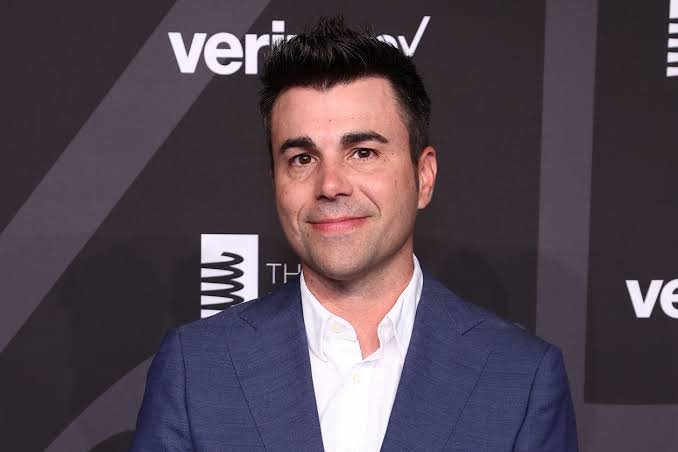
Mark Rober is an American engineer, inventor, and YouTuber best known for turning advanced engineering concepts into viral entertainment. Born on March 11, 1980, in Orange County, California, Rober spent nine years as a NASA Jet Propulsion Laboratory (JPL) engineer — including seven years on the Mars Curiosity rover — before building one of the largest science channels on YouTube, with more than 72 million subscribers and over 15 billion cumulative views. He is also the founder of CrunchLabs, a STEM subscription-box company he launched in 2022.
That one paragraph answers the most common search query about him — “who is Mark Rober” — but his story is far richer than a single résumé line. This biography traces his early life, education, NASA career, YouTube rise, business ventures, personal life, and lasting influence on science education.
| Category | Details |
|---|---|
| Full Name | Mark Braxton Rober |
| Born | March 11, 1980 |
| Birthplace | Orange County, California, USA (raised in Brea, California) |
| Age (2026) | 46 |
| Nationality | American |
| Occupation | Engineer, inventor, YouTuber, educator, entrepreneur |
| Education | B.S. Mechanical Engineering, Brigham Young University (2004); M.S. Mechanical Engineering, University of Southern California |
| Known For | NASA Curiosity rover engineering, Glitter Bomb anti-theft device, CrunchLabs, #TeamTrees, #TeamSeas |
| Years Active (YouTube) | 2011–present |
| YouTube Subscribers | 72+ million (2026) |
| Companies | CrunchLabs (founder), formerly Digital Dudz |
| Former Employers | NASA/JPL (2004–2013), Apple Inc. (2015–2020) |
| Spouse | Lisa Rober (m. 2015, divorced 2021) |
| Children | One son, Jonathan |
| Residence | Sunnyvale, California |
| Estimated Net Worth | Roughly $20–25 million (estimates vary; some place it higher given CrunchLabs’ growth) |
Mark Rober was born on March 11, 1980, and grew up in Brea, California, as the youngest of three siblings. From childhood, he displayed the instincts of an engineer rather than a typical kid with typical toys — one frequently cited example is that he built a pair of onion-cutting goggles as a school science project to solve the everyday problem of eye irritation, an early sign of the practical, problem-first thinking that later defined his YouTube career.
He graduated from Brea Olinda High School in 1998. During high school physics classes, Rober has said he realized mechanical engineering was the discipline that matched how his brain worked, reasoning that hands-on, mechanical problems — like his later world’s-largest Nerf gun project — required a mechanical engineer’s skill set rather than an electrical or chemical one.
For his undergraduate studies, Rober attended Brigham Young University (BYU) in Utah, earning a Bachelor of Science degree in mechanical engineering in 2004. He went on to complete a master’s degree in mechanical engineering at the University of Southern California (USC), rounding out an academic foundation built specifically around applied, hardware-focused engineering rather than pure theory.
This educational path — BYU for undergraduate mechanical engineering, USC for graduate study — is a key part of Mark Rober’s early life story and explains how he landed one of the most competitive engineering jobs in the country straight out of graduate school.
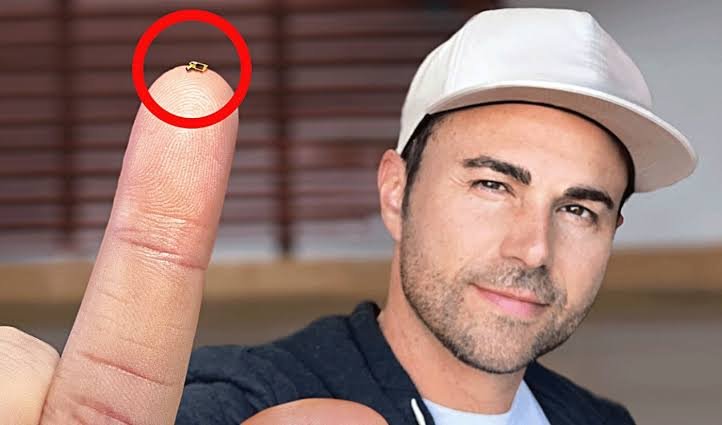
Rober joined NASA’s Jet Propulsion Laboratory in 2004, a job he has described as landing “Disneyland for engineers.” He worked at JPL for nine years, seven of which were dedicated to the Mars Curiosity rover — one of the most technically demanding planetary missions NASA has ever undertaken.
His engineering responsibilities included work on the rover’s descent stage, commonly called the “sky crane,” which used rocket-powered thrusters to lower Curiosity onto the Martian surface during its entry, descent, and landing sequence, along with contributions to the rover’s robotic arms and top-deck sample-collection mechanisms. Beyond Curiosity, he designed and delivered hardware for several other JPL missions, including the Advanced Modeling Technology (AMT) project, GRAIL, and SMAP (Soil Moisture Active Passive).
Rober was also one of the primary architects of “JPL Wired,” an internal knowledge-capture wiki, and co-authored a published case study on using wiki technology to preserve institutional knowledge inside a high-tech organization — evidence that his interest in teaching and knowledge-sharing predates his YouTube career by years.
While still working at NASA, Rober began posting videos online, including his very first viral hit in October 2011: a Halloween costume using an iPad to simulate a gaping hole in his torso. The idea led him to found Digital Dudz, a line of app-integrated Halloween costumes, which he later sold to costume company Morphsuits in 2013 — the same year he left NASA.
After roughly two years running his costume business, an old NASA colleague recruited Rober to Apple Inc. in 2015. He spent the next several years working as a product designer in Apple’s secretive Special Projects Group, contributing to virtual reality systems for self-driving cars. Under Apple’s strict confidentiality requirements, Rober authored patents related to VR in autonomous vehicles, though he has said publicly that non-disclosure agreements prevent him from discussing most of the specific work. He left Apple in early 2020 to focus on content creation full-time.
Rober quietly ran his YouTube channel throughout both his NASA and Apple careers before going all-in on content creation. His breakthrough moment as a science creator came with the “Glitter Bomb” series — elaborate, engineered packages designed to catch and humiliate porch pirates with glitter, foul-smelling spray, and hidden cameras. The original Glitter Bomb video, posted in December 2018, reportedly drew around 25 million views in a single day and became one of the most-watched videos on his channel.
Other signature projects that built his channel’s identity include the “Backyard Squirrel Maze” series (the first installment alone drew more than 140 million views), giant elephant-toothpaste chemical reactions, a world’s-largest Nerf gun, an automatic snowball-launching turret, and elaborate physics-based domino and roller-coaster builds. As of 2026, his channel has surpassed 72 million subscribers and more than 15 billion total views, making him one of the most-watched independent science educators in the world.
In 2022, Rober founded CrunchLabs, an educational technology company that ships monthly STEM-focused “Build Box” kits, teaching subscribers — largely children and teenagers — to think like engineers through hands-on projects. The company later expanded with “Hack Packs” aimed at teens and adults, alongside additional merchandise and educational programming. CrunchLabs has grown into what several industry analysts now describe as the largest single component of Rober’s broader business portfolio.
Mark Rober is best known for combining rigorous mechanical-engineering expertise with viral, high-production-value entertainment — turning topics like Mars rover technology, package-theft deterrence, and elaborate backyard physics experiments into videos watched by tens of millions of people. His signature Glitter Bomb anti-theft devices, in particular, made him a household name well beyond typical science-education audiences.
Rober became famous gradually rather than overnight. He began posting videos in October 2011 while still working full-time at NASA, initially as a creative outlet rather than a career plan, since monetizing YouTube content wasn’t yet common at the time. His channel grew steadily through DIY gadget videos and science experiments, but it was the December 2018 Glitter Bomb video — combined with collaborations with larger creators like MrBeast starting in 2019 — that pushed his channel into mainstream viral territory and cemented his reputation as one of YouTube’s premier engineering entertainers.
Mark Rober married Lisa Rober (also referenced in some reports by her name Lisa Nicole Earl) in 2015. The couple has one son together, Jonathan, who is on the autism spectrum. Rober has used his platform for autism advocacy, including co-hosting the 2021 “Colour the Spectrum Live” fundraiser with Jimmy Kimmel that raised $3 million for NEXT for AUTISM.
Rober and his wife divorced in 2021, though he kept the separation private for several years. He publicly confirmed the divorce in a September 2024 post on X, explaining that he generally keeps his personal life private but wanted to clarify that it had been three and a half years since the divorce and that he no longer wore a wedding ring in his videos. Rober has continued to reside in Sunnyvale, California, where he relocated in 2015 and where CrunchLabs is based.
Mark Rober’s net worth is most commonly estimated at around $20–25 million, according to sources such as Celebrity Net Worth, though some financial estimates that factor in CrunchLabs’ rapid growth and his YouTube advertising revenue place the figure considerably higher. His income streams include YouTube advertising revenue, brand sponsorships with companies like Google, T-Mobile, Rivian, and Disney, and — increasingly — CrunchLabs subscription revenue, which industry observers now consider his largest single revenue source.
Beyond personal wealth, Rober’s cultural influence is significant: he has helped popularize STEM education for a generation of young viewers, inspired charitable fundraising campaigns that have collectively raised tens of millions of dollars for environmental and humanitarian causes, and demonstrated a career model — engineer turned educator-entrepreneur — that has influenced how other credentialed professionals approach content creation.
As of 2026, Mark Rober remains one of the most-watched science communicators in the world, with his YouTube channel continuing to post elaborately produced, engineering-driven content that routinely draws tens of millions of views per video. He has expanded well beyond YouTube through CrunchLabs, a Netflix competition series in development, continued charitable campaigns like #TeamWater, and ongoing advocacy for STEM education and autism awareness.
His broader legacy lies in proving that rigorous engineering credentials and mass-market entertainment aren’t mutually exclusive — a former Mars-rover engineer can build one of the internet’s largest science education platforms without diluting the underlying technical substance of the work.
Mark Rober is an American engineer, inventor, and YouTuber, best known for his nine years as a NASA Jet Propulsion Laboratory engineer on the Curiosity rover and for his popular science and engineering videos on YouTube.
Mark Rober was born on March 11, 1980, making him 46 years old as of 2026.
Most estimates place Mark Rober’s net worth around $20–25 million, drawn mainly from YouTube ad revenue, brand sponsorships, and his CrunchLabs subscription business, though some estimates run higher.